
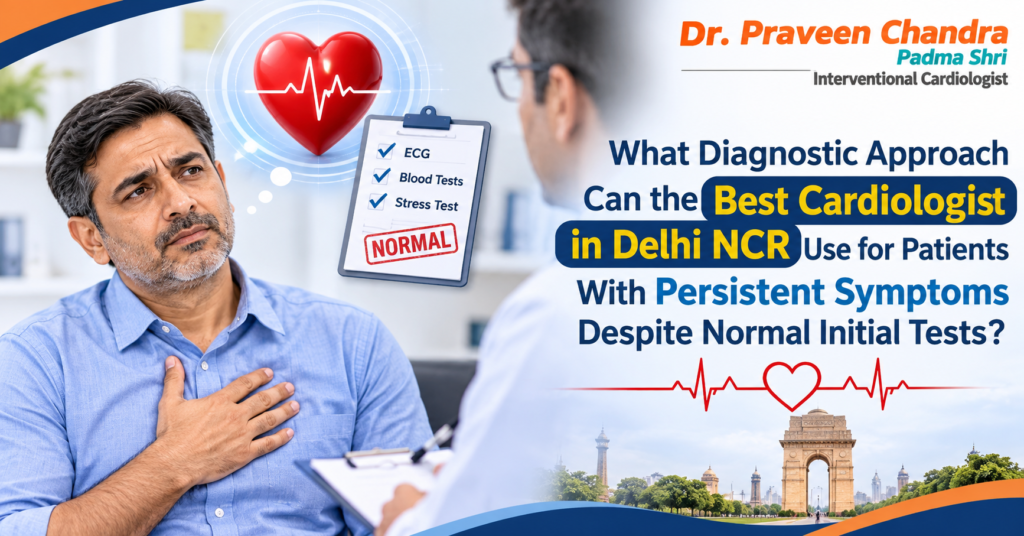
Persistent symptoms such as chest discomfort, breathlessness, dizziness, unusual fatigue, or an irregular heartbeat can be concerning, especially when initial medical tests show normal results. Many patients assume that normal ECG or blood test findings mean there is no underlying heart problem. However, some cardiac conditions may not become apparent during routine testing. Symptoms can also occur intermittently, making them difficult to identify during a standard examination. This is where a detailed clinical assessment becomes important. Best Cardiologist in Delhi NCR is a commonly used search term among patients looking for experienced cardiac care and a clearer understanding of unexplained symptoms. Dr. Praveen Chandra focuses on the importance of evaluating symptoms alongside medical history, risk factors, and appropriate diagnostic investigations rather than relying on a single normal test result.
Why Can Heart-Related Symptoms Continue Despite Normal Initial Tests?
Cardiac investigations at the beginning can be helpful in detecting a number of common heart diseases, but these are not enough to detect all heart diseases. For instance, an ECG is a record of the electrical activity of the heart at any one time. In case the irregular rhythm appears only occasionally, it will not show up in the test. Furthermore, a normal resting ECG does not mean that there is no coronary artery disease or other diseases which may be detected during any form of physical activity. Some people have symptoms due to a number of reasons related to their hearts.
Several other factors could lead to the same symptoms. Symptoms like breathlessness and discomfort may be caused by anaemia, thyroid problems, respiratory ailments, acid reflux, anxiety, or some medications. Doctors will have to know when the symptoms take place, how long they last, what brings them about, and whether they are becoming more common.
How Does the Best Cardiologist in Delhi NCR Begin a Detailed Cardiac Assessment?
Generally, a thorough assessment begins with an elaboration of the symptoms and medical history of the patient. Rather than proceeding directly to ordering several tests, the cardiologist first assesses the problem and reasons behind it. The cardiologist may inquire if the pain in the chest is felt while exercising, resting, or after eating. For patients who have palpitations, they may be asked the length and number of times they feel it, whereas for patients with shortness of breath, they may be asked if the problem is experienced while doing daily activities or while at rest. Medical history also plays a very important role.
A physical examination could involve assessing blood pressure, pulse rate, oxygen saturation, and cardiac sounds. If there are other signs or symptoms, then depending on those symptoms, the doctor could check for signs of fluid retention or any other sign that might point towards a heart problem. This is important because it determines what tests will be needed. It also minimizes the chance of unnecessary tests being done.
Which Diagnostic Tests May Help Identify Hidden Cardiac Conditions?
If there are persistent symptoms but normal initial results, additional tests can be done depending on the patient’s clinical presentation. Each test yields varying pieces of information, hence the reason why each test is chosen accordingly.
1. Echocardiography
The echocardiogram involves the use of ultrasound waves in the imaging of the heart. This investigation enables the evaluation of the structure and size of the heart chambers, the movement of the heart walls, the pumping action, and the heart valves. The test is applicable in the assessment of breathlessness, fatigue, or any other symptom that might suggest structural problems of the heart. Additionally, it is helpful in the identification of some abnormalities which may not be detected through a regular ECG.
2. Holter Monitoring
There are some heart rhythm problems that come up only sporadically. Such heart rhythm disturbances might not be recorded on an ECG if the patient does not have any symptoms at the time of the test. The recording of the Holter monitor measures the electrical activity of the heart for 24-48 hours, depending on the type of monitor and clinical needs. Normally, patients do their everyday activities while using this monitor. The purpose of this test is to find out whether there are any intermittent heart rhythm problems.
3. Exercise Stress Testing
The exercise stress test is one that is used to find out how the heart responds to exercise. For this test, the patient walks on a treadmill, and his/her heart rate, blood pressure, ECG changes, and symptoms are assessed. The abnormalities that can only be found out through exercise of the heart due to its need for more oxygen during exercise can be found out using this test.
4. Coronary CT Angiography
The Coronary CTA is one of the non-invasive tests that involve the use of the CT technique along with contrast to examine the coronary arteries. It helps detect any presence of plaque, stenosis, or occlusion in the arteries delivering blood to the heart. The test can be prescribed if the patient has symptoms of coronary artery disease but other tests were unable to provide a definitive conclusion. There are a number of parameters that go into deciding on this test.
5. Cardiac MRI
MRI of the heart reveals the picture of the heart’s structure and tissue. This helps diagnose inflammation of the heart muscle, scarring of the tissue, cardiomyopathies, and other conditions that may be affecting the heart. The test is suggested when there is something abnormal detected through echocardiogram or other diagnostic tests. However, not all patients with undiagnosed symptoms require cardiac MRI.
How Can the Best Cardiologist in Delhi NCR Investigate Symptoms That Occur Occasionally?
Having intermittent symptoms could lead to difficulties with diagnosis since they tend to vanish before patients can reach the hospital. It occurs predominantly with symptoms such as palpitations, episodes of dizziness, and chest pain. In such cases, the timing and nature of the symptoms become crucial for diagnosing them properly. Patients should keep track of the symptoms with the help of documenting the time when they appeared, their duration, what a person did at that point in time, and what else happened alongside those symptoms.
For example, a Holter monitor test will be considered if the symptoms occur frequently. If the symptoms rarely occur, an event monitor test or extended rhythm monitor test will be performed. An exercise test will be conducted if there is any relation between the symptoms and physical activity. When there are symptoms of chest pain but not during physical activity, other tests will be performed in order to determine other possible reasons other than those of the cardiovascular system. The main goal of the test is to collect data when the symptoms occur.
Can Non-Cardiac Conditions Cause Symptoms That Resemble Heart Problems?
Yes. Not all instances of chest pain, breathlessness, and dizziness are caused by heart-related conditions. There are other illnesses that can cause these symptoms, hence the need for proper diagnosis. The lack of oxygen in the blood caused by anemia can cause fatigue, weakness, and breathlessness. Illnesses in the thyroid glands can affect the rate of the heartbeat, causing palpitations in some cases. Diseases in the lungs can cause difficulty in breathing, while heartburn can cause chest pain as if the pain is originating from the heart. But these symptoms should not be taken as a sign of stress at once.
As shown in the presentation of the patient, a doctor may recommend doing blood tests, thyroid function tests, hemoglobin levels, or even breathing tests. These will all help one rule out any problems related to the heart as well as unnecessary cardiac tests.
What Information Should Patients Share Before Undergoing Further Cardiac Tests?
Patients can make their consultation more productive by providing clear information about their symptoms and previous medical evaluations.
Some useful details include:
Symptom onset pattern: Specify when this problem start and whether it is increasing.
Triggering factors: Whether the symptoms occur due to exercise, mental tension, eating, or at rest.
Old records: Specify the old reports of your electrocardiogram, echocardiogram, blood tests, and other heart investigations.
Medical history: Your history of diabetes, high blood pressure, cholesterol, thyroid problems, and other heart diseases.
Medicine: Mention all the medicines that you take, and whether any change in medication has occurred recently.
Family history: History of heart problem in your family members at an early age.
This information helps the cardiologist assess the clinical history of the patient and determine if there is a need to repeat the previous studies or not.
When Should Persistent Cardiac Symptoms Receive Immediate Medical Attention?
Rather, it is advisable that you take note of these signs, especially when they are new and seem to affect your quality of life. While it may not necessarily mean that these symptoms are linked to your heart condition, there may be signs of something dangerous, such as:
Severe or continuous chest pain or tightness.
Chest pain or tightness spreading to the arm, jaw, back, or shoulder.
Difficulty breathing suddenly or severely.
Unconsciousness or sudden loss of consciousness.
Palpitations along with chest pain, severe dizziness, or fainting.
Chills, sweating, nausea, or weakness with chest pain.
The symptoms listed above could mean that you have a serious cardiac problem such as a heart attack or an arrhythmia. Do not wait until your next appointment, nor should you rely on your past normal test results.
Conclusion
Normal initial test results can be reassuring, but they do not always explain persistent symptoms. Consulting the Best Cardiologist in Delhi NCR can help patients understand their symptoms and determine whether further cardiac evaluation is needed. A more detailed diagnostic approach may involve reviewing medical history, identifying symptom patterns, performing a physical examination, and selecting additional investigations such as echocardiography, Holter monitoring, stress testing, coronary CT angiography, or cardiac MRI. The right approach depends on the patient’s symptoms, risk factors, and previous findings. Rather than repeating the same tests without a clear reason, a systematic assessment can help identify conditions that require further attention and distinguish cardiac concerns from other possible causes.
For individuals experiencing unexplained chest discomfort, breathlessness, palpitations, or recurring dizziness, consulting an experienced specialist can help determine the next appropriate steps. Dr. Praveen Chandra encourages the importance of timely cardiac evaluation and an evidence-based approach to understanding persistent symptoms.
Frequently Asked Questions
1. Can a normal ECG eliminate all heart-related issues?
No. ECG is a record of the electrical activity of the heart at a particular moment. There may be some cases when an ECG will not reveal some rhythm disturbances, structural changes in the heart, or all forms of coronary artery disease. Further examination may be necessary based on the patient’s symptoms.
2. What type of examination can help identify occasional irregularities in the heart rhythm?
Holter monitoring is widely applied to record the heart rhythm during a definite period of time. In case of rare symptoms, an event monitor or prolonged rhythm monitoring may be chosen.
3. Why would a physician order an echocardiogram after a normal ECG?
ECG is a test of electrical activity, and an echocardiogram is a test of heart structure, valves, chamber sizes, and heart function.
4. Can anxiety or stress produce symptoms of heart disease?
Yes. Stress and anxiety can be responsible for symptoms like palpitations, chest heaviness, sweating, and breathlessness. But proper investigations need to be done to rule out cardiac origin before labeling the symptoms as due to anxiety.
5. In what circumstances should a patient go to a cardiologist even if the results from the first tests were normal?
Symptoms that persist despite normal findings include recurring chest pain, breathlessness, palpitations, or dizziness. Severe chest pain, sudden breathlessness, or fainting warrants immediate medical attention.